
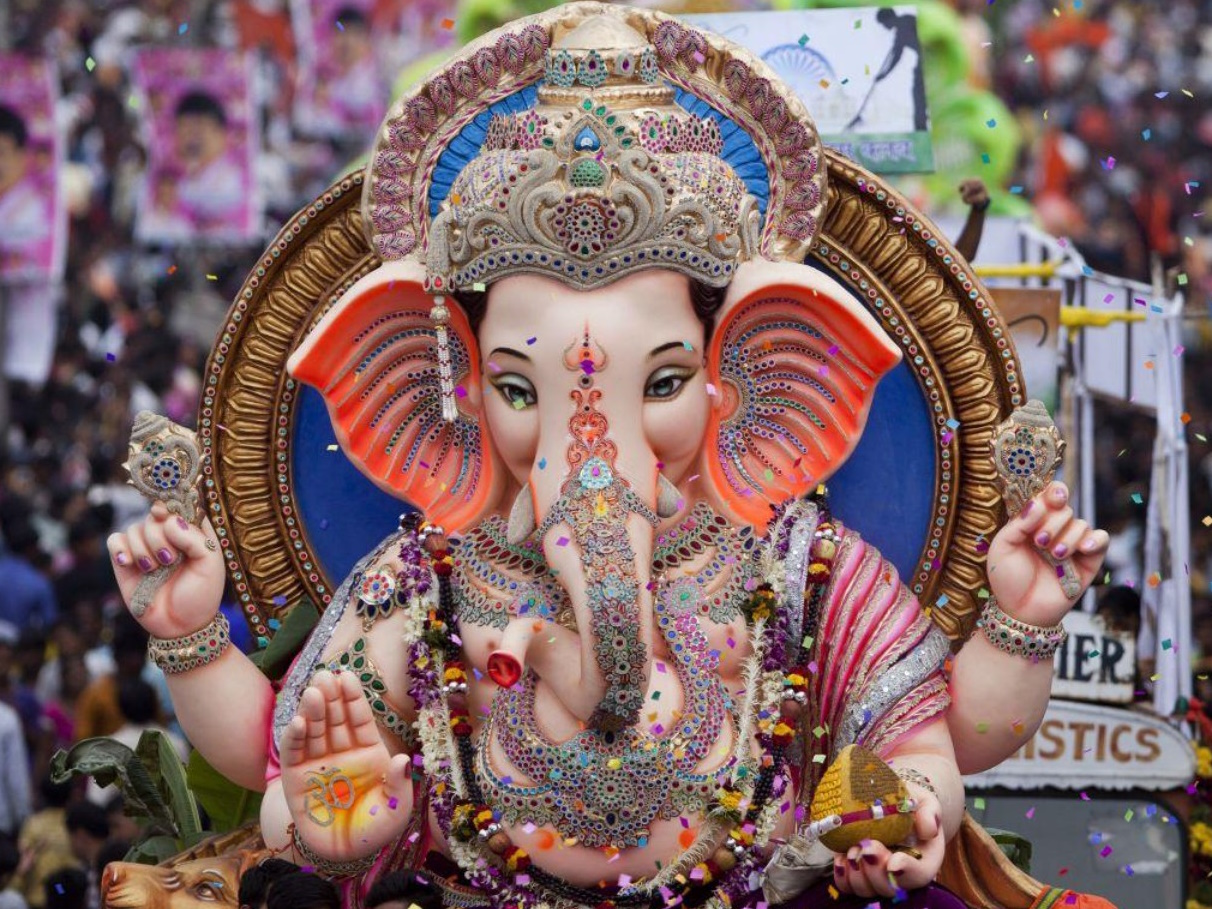
Eco Ganesh - The new Avatar or Ganesh Idols that is immersionalble, easily dissolvable in water and food for Fish and other living beings.
Let's celebrate with ultimate devotion and respect to God. Let us not crate idol debris on the beach which will be walkied on by us.
- Let's resepect the God and the idol immersion process in Eco Friendly way
- Eco Ganesh is made up of foodgrain pulp, yet dried and hard and last for 2 months. Will dossolve only in water.
- Edible for Fishes and other water living species
Ganesh Chaturthi is a Hindu festival honoring Lord Ganesha, the remover of obstacles. Celebrated for around ten days, it involves installing clay idols, offering prayers, and vibrant processions. The festival promotes unity, cultural richness, and new beginnings.
Our Mission
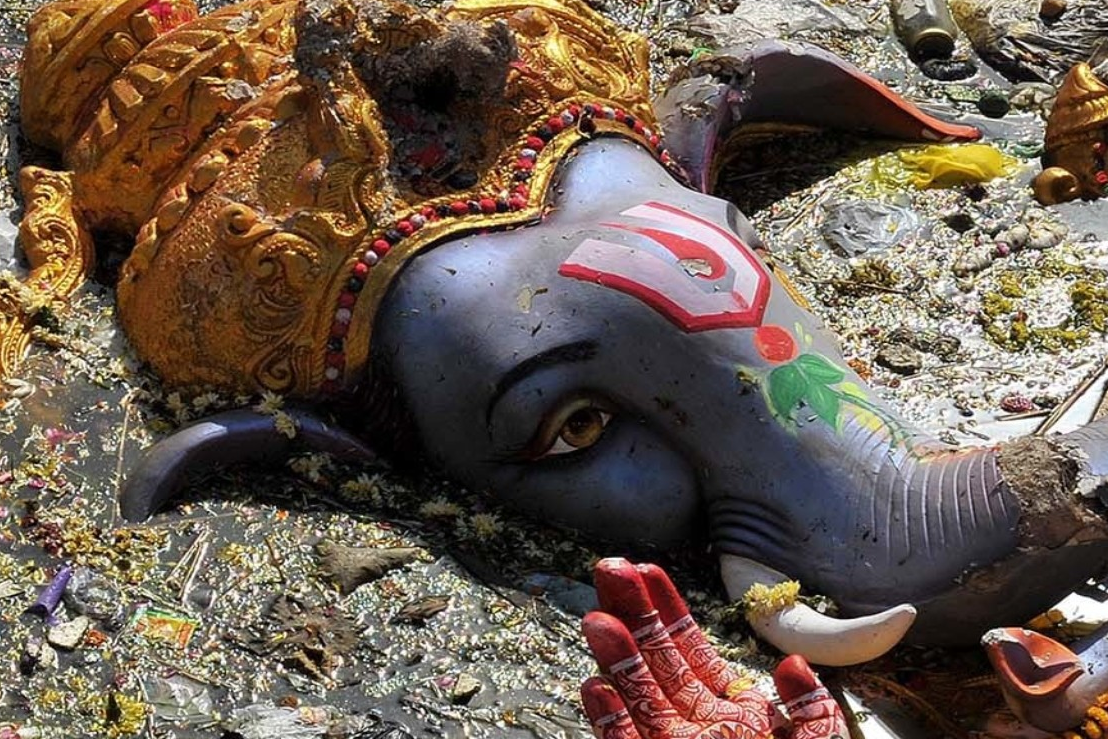
Celebrate Ganesh Charthurthi and the immersion process that is 100% eco friendly.
Our Plan
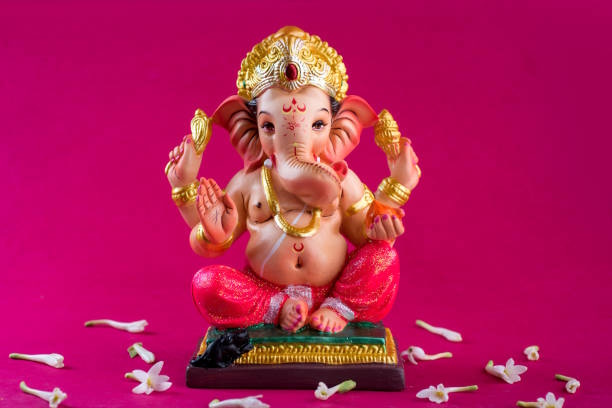
While we offer the prayers to Lord Gahesha and follow the rituals and cultural values of the immersion process. However, recent chemical based hardboard idols create lot of environmental harzards. They all washed ashore and piled up as waste dumps on the beaches.
Our Vision
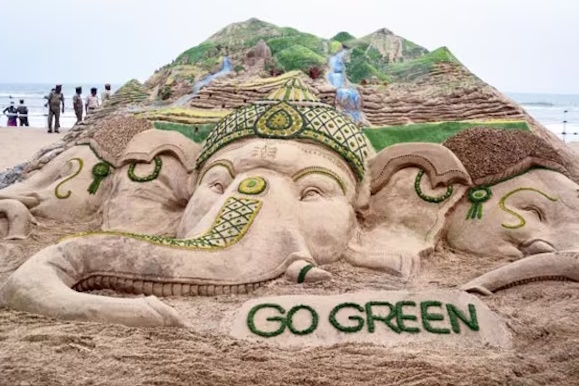
Offer Our praysers to Lord Ganesha and Eco-Friendly Environment.
Ganesh Chaturthi - Intro
Vinayaka Chaturthi, also known as Ganesh Chaturthi, is a revered Hindu festival dedicated to Lord Ganesha, the elephant-headed deity known as the remover of obstacles and the god of wisdom and prosperity. Celebrated with fervour and devotion, this festival involves the installation of intricately crafted clay idols of Lord Ganesha in homes and public places. Devotees engage in rituals, prayers, and offerings to seek His blessings.
Celebration Days
Day 1: Idol Installation - On the first day, the idol of Lord Ganesha is installed in homes, temples, or public places. The installation is done with Vedic rituals and chants.
Days 2-9: Daily Worship - Each day, the idol is worshipped with rituals, prayers, and offerings. Devotees may perform aarti (lighting of lamps), sing devotional songs, and recite hymns dedicated to Lord Ganesha.
Day 10 (Ananta Chaturdashi): Special Worship - This day involves elaborate rituals and prayers. Devotees seek blessings and offer gratitude to Lord Ganesha before his departure.
Day 11 (Ganesh Visarjan): Immersion - On this day, the idol is taken in a grand procession to a water body for immersion (Visarjan). The procession includes music, dancing, and chanting. The immersion ritual signifies Lord Ganesha's return to his divine abode.
In some places, Vinayaka Chaturthi Festival Celebrated for 9 Days (Navaratri Style)Both the 11-day and 9-day processes involve intense devotion, rituals, and celebrations. The choice of duration depends on regional customs, traditions, and personal preferences.
The Immersion Process- Visarjan
The immersion ritual, known as "Visarjan," is a crucial part of the Vinayaka Chaturthi festival. It involves bidding farewell to the clay idols of Lord Ganesha that were worshipped during the festivities. The ritual holds several meanings:
- Symbolic Transition: The immersion (Visarjan) ritual on the final day holds special significance, symbolizing the temporary nature of life and the cycle of creation and dissolution. The clay idol, which symbolizes the presence of Lord Ganesha, is returned to nature, representing the impermanent nature of existence.
- Surrender and Gratitude: By immersing the idol, devotees express surrender to the divine will and gratitude for blessings received. It's a way of acknowledging that all things come from and return to the divine source.
- Cleansing and Purification: Immersing the idol in water is believed to purify it and wash away any negativity or impurities associated with the worship. This process prepares the idol for its return to nature.
- Spiritual Transition: Hindu mythology suggests that after immersion, Lord Ganesha returns to Mount Kailash, his abode. This adds a spiritual narrative to the act of immersion.
The ritual involves a procession, often with music and dancing, as the idol is carried to a water body. Prayers and hymns are chanted, and offerings are made. The idol is gently placed into the water, symbolizing its integration into nature and Lord Ganesha's departure from the devotees' physical presence.
Overall, immersion is a poignant ritual that embodies philosophical, spiritual, and environmental values, reminding devotees of life's impermanence and the cycle of creation and dissolution.
Issues associated with the immersion of ceramic idols:
- Durability and Breakage: Ceramic idols can be delicate and prone to breakage during the immersion process, especially when handled in large processions or crowded areas. This may lead to the release of sharp fragments into the water, potentially posing a safety hazard to people and aquatic life.
- Water Pollution: While ceramic idols themselves are biodegradable, they may take some time to completely dissolve in water, especially if they are coated with certain paints or decorations. This slow dissolution can temporarily contribute to water pollution if not properly managed.
- Artificial Colors and Decorations: Some ceramic idols are adorned with artificial colors, paints, and decorations that may not be environmentally friendly and can leach harmful substances into the water during immersion.
- Impact on Aquatic Life: Even though ceramic idols are biodegradable, the process of their breakdown may consume oxygen in the water, potentially affecting aquatic ecosystems and marine life.
- Volume of Immersion: Large-scale immersion of ceramic idols in a single water body within a short period can lead to overcrowding and pollution of that water body, affecting its overall health and ecosystem.
Solution: To address these issues and ensure a more environmentally friendly approach to idol immersion, several steps can be taken:
- Use of Natural Colors: Opt for natural, water-soluble colors and dyes for decorating ceramic idols, reducing the release of harmful substances into the water.
- Alternative Materials: Explore alternative biodegradable materials for idol creation that have minimal environmental impact.
- Public Awareness or Eco-Friendly Practices: Raise awareness among devotees about the importance of using eco-friendly materials and sustainable practices during the festival.
- Post-Immersion Cleanup: Organize post-immersion cleanup drives to collect any remnants of ceramic idols that may not have completely dissolved, ensuring the water bodies remain clean.
In recent years, there has been a growing emphasis on eco-friendly practices during the festival. Traditional idols were often made from materials that were not biodegradable, leading to pollution of water bodies. Many communities now encourage the use of clay idols and natural, water-soluble colors to minimize the environmental impact of the immersion
It's important for communities and organizers to strike a balance between the cultural significance of the festival and its potential impact on the environment. By adopting responsible practices and making informed choices, the immersion of ceramic idols can be conducted in a way that respects both tradition and nature.
Frequenty Asked Questions
-
How many days will the Eco-Ganesh Idol last?
The idols will last for atleast 2 months without any impact.
-
What happens when the Idol is immersioned?
The idol will dissolve in to the water and particles of food grains will spread acroos the water.
-
What are the benefits for environment?
No chemical. No polluiton. No sea-shore debris. No disrespect to God. Food for Fishes. 100% Eco Friendly.
-
Whar is the cost of eco-ganesh idols?
The price will change depending upon the size and customization. Please contact us for further details.
-
Is there custom desing for large size idols?
Yes, we do 100% customization and provide the product the way you want it.
-
Is delivery available?
Custom deliveries are made to the location as per requirements. Idols upto 2 feet height can be delivered through courier service. We may add amazon order as well. Please wait for our integration with Amazon.
Contact Us
Y-117, Y block Main St
Anna Nagar
Chennai, India 600040
info@eganesh.in
+919884464996